

Dr Octavio Islas
CV Octavio Islas (Resumido)
@octavioislas
——————
Participantes
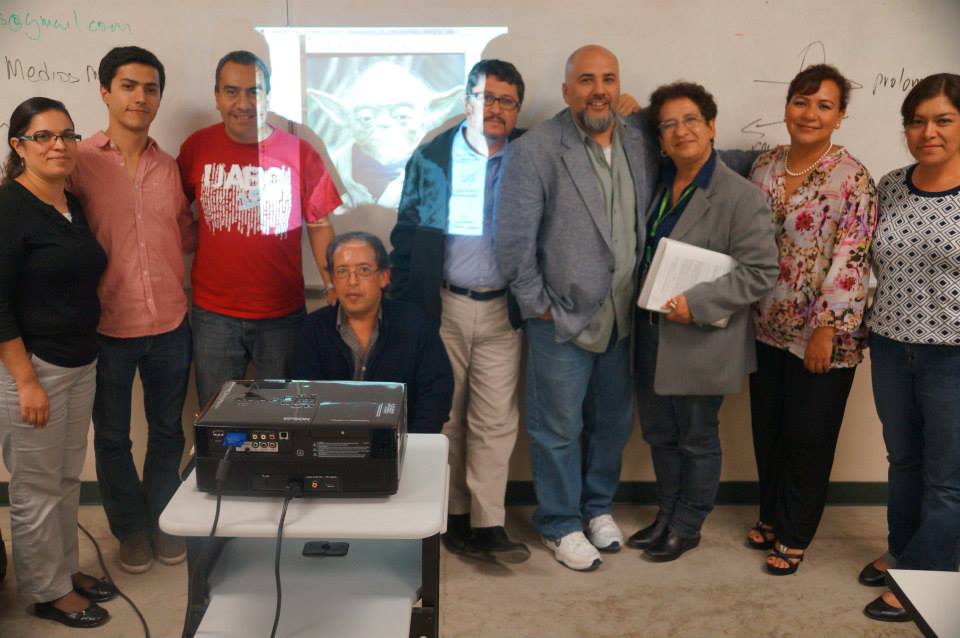
René J. Muñoz Vélez
Elvia Méndez Fregoso
Alonso García Cortés
María de Jesús Montoya R.
Alfredo González Reynoso
Joaquín Chávez
René Muñoz Vélez
Iván Beltmont Martínez
Héctor Macías
Veridiana Cuellar
Erika Valenzuela
Claudia I Becerra
Rocío Alejandra Villanueva
Verona Vargas Mena
Gustavo Rubén Torres Ramírez
Concepción Baxin Melgoza
Irma Mercado Alcalá
Gerardo León
—————————
Temario
1. Vida de Marshall McLuhan.
Fernández Collado, C. y Hernández Sampieri, R “De la torre de control a la torre de marfil”. En Razón y Palabra. Disponible en:http://www.razonypalabra.org.mx/MarshallMcLuhan_DeLaTorreDeMarfilALaTorreDeControl.PDF
Coupland, D. (2009). Marshall McLuhan. Canadá: Penguin.
Video: Wolfe, T. (2011). Introduction. Marshall McLuhan Speaks. Centennial 2011. Disponible en: https://www.youtube.com/watch?v=f1RNLFlYfVk
Arbol genealógico Marshall McLuhan, en McLuhan Family History:http://www.infoese.ca/McLuhan2.pdf.
Sitio web de Marshall McLuhan: http://marshallmcluhan.com/biography/
2.- Marshall McLuhan y la Ecología de los Medios.
Media Ecology Association. http://www.media-ecology.org/media_ecology/
Relación de lecturas básicas sobre Ecología de los Medios http://www.media-ecology.org/media_ecology/readinglist.html
Neil Postman. Cinco cosas que debemos saber acerca del cambio tecnológico http://www.aciprensa.com/reportajes/newtech/postman.htm
Harrocks, C. (2004). McLuhan y la realidad virtual. España: Gedisa.
McLuhan M., y Fiore, Q. (1987). El medio es el masaje. Un inventario de efectos. Barcelona, Paidós.
McLuhan M. (1996). Comprender los medios de comunicación. Las extensiones del hombre. España: Paidós.
Irma Mercado A. y Héctor Macías Capítulo 1
Gerardo León, Alfredo González Reynoso Capítulo 2
Concepción Baxin, María Montoya Capítulo 3
Alfonso García Capítulo 4
Elvia Méndez Fregozo Capítulo 5
Joaquín Chávez. Capítulo 6
René Javier Muñoz V. Capítulo 7
3.- McLuhan y los nuevos medios
Logan, R (2010). Understanding New Media: Extending Marshall McLuhan. USA, Peter Lang Publishing.
McLuhan101-Mex
MexLect2
McLuhanMexTalk3
Mex 4Talk
McLuhanComplexityMex5
TripleCsBook
——————
Actividades
1.- Darse de alta en el boletín de noticias (Mailing list) en el web de la Media Ecology A. http://www.media-ecology.org/list/index.html#Subscribing%20to%20the%20List
————————
Bibliografía recomendada
Benassini, C. “Orígenes y desarrollos recientes de Sociedad de la Información. Una introducción al pensamiento de Norbert Wiener, Marshall McLuhan y Daniel Bell. En Rebeil, M. (Coord.). Anuario XIV CONEICC. México: Consejo Nacional para la Enseñanza y la Investigación de las Ciencias de la Comunicación, pp. 119-146.
Bolter, J., y Grusin, R. (1999). Remediation. Understanding New Media.USA: The MIT Press.
Casey, Man Kong Lum: “The Intellectual Roots of Media Ecology”. En The New Jersey Journal of Communication . Vol. 8. Número 1. Primavera de 2000, pp.1-8.
Czitrom, D. (1985). De Morse a McLuhan. México: Publigraphics.
Coupland, D. (2009). Marshall McLuhan. Canadá: Penguin.
Crosby, H., and Bond, G. (Editors). (1968). The McLuhan Explosion. New York: American Book Company.
Day, B. (1967). The Message of Marshall McLuhan. London: Lintas.
DeMott, B. “Against McLuhan”. En Stearn, G. (ed). (1967). Hot and Cool A Critical Symposium. New York: The Dial Press.
Duffy, D. (1969). Marshall McLuhan. Toronto: McClelland and Stewart.
Federman, M; De Kerckhove, D. (2003). McLuhan for managers. Canadá: Viking.
Fernández, C., y Sampieri, R. “De la torre de control a la torre de marfil”. En Razón y Palabra. Disponible en:http://www.razonypalabra.org.mx/MarshallMcLuhan_DeLaTorreDeMarfilALaTorreDeControl.PDF
Finkelstein, W. (1968). Sense and Nonsense of McLuhan. New York: International Publishers.
Fitzgerald, J. (2001). Marshall McLuhan: wize guy. Montreal: XYZ Publishing.
Goody, J. (1977). The Domestication of the Savage Mind. Cambridge, England and New York: Cambridge University Press.
Gordon, W.T. (1988). Marshall McLuhan. Escape into Understanding: the Authorized Biography. USA: Basic Books.
Gordon, W.T (2003). Understanding media: the extension of man. Critical edition. Germany: Ginko Press.
Gordon, W.T. (2010). McLuhan. USA: Continuum.
Gordon, W.T. (2010). McLuhan. A Guide for the Perplexed. USA: Continuum.
Gordon, W.T, y Willmarth, S. (1988). McLuhan para principiantes.Argentina, Era Naciente NRL.
Harrocks, C. (2004). McLuhan y la realidad virtual. España: Gedisa.
Innis, H. (1950). Empire and Communications. Oxford: Clarendon Press.
Innis, H (1951). The Bias of Communication. Toronto: University of Toronto Press.
Innis, H. (1952) Changing Concepts of Time. Toronto: University of Toronto Press.
Jenkins, H. (2008). Convergence Culture. La cultura de la convergencia de los medios de comunicación. España: Paidós.
Johnson, S. (1997). Interface culture: How new technology transforms the way we create and communicate. New York: Harper Collins.
Johnson, E; Wolfe, T. (1973). The New Journalism. New York: Harper & Row.
Kong, C. (2006). Perspectives on culture, technology and communication.USA: Hampton Press.
Kroker, A. (1985). Technology and the Canadian Mind: Innis/McLuhan/Grant. New York, St. Martin’s.
Lessig, L. (2006). CODE Version 2.0 New York: Basic Books.
Logan, R. (2004). The alphabet effect. A Media Ecology understanding of the making of Western Civilization. USA: Hampton Press.
Logan, R (2010). Understanding New Media: Extending Marshall McLuhan. USA: Peter Lang Publishing.
Logan, R. (2013). McLuhan misunderstood. Setting the record straight.Toronto: Key Publishing House.
Marchand, P. (1989). Marshall McLuhan: The Medium and the Messenger. New York, Ticknor & Fields.
McLuhan, E. (2008). Marshall McLuhan´s theory of communication: The Yegg.
McLuhan, E., y McLuhan, M. (2011). Theories of Communication. USA: Peter Lang P.
McLuhan, M. (1969). Counterblast. Toronto: McClelland and Stewart.
McLuhan, M. (1970). Culture is our Business. New York: McGraw-Hill.
McLuhan, M. (1998). La Galaxia Gutenberg. Génesis del homo typographicus. Barcelona: Círculo de Lectores.
McLuhan, M. (1996). Comprender los medios de comunicación. Las extensiones del ser humano. Barcelona: Paidós Comunicación.
McLuhan, M. (2003). The Mechanical Bride: Folklore of industrial man.USA: Ginko Press.
McLuhan, M. (2004). Understanding me. Lectures and interviews. USA, The MIT Press.
McLuhan, M. (2005). Marshall McLuhan Unbound. California, Gingko Press.
McLuhan, M., y Carson, D. (2003). The book of probes. New York: Ginko Press.
McLuhan, M y Carpenter, E. (1970). Explorations in Communications.London: Cape.
McLuhan M., y Fiore, Q. (1968). War and Peace in the Global Village.New York: McGraw-Hill.
McLuhan M., y Fiore, Q. (1987). El medio es el masaje. Un inventario de efectos. Barcelona: Paidós
McLuhan, M., y McLuhan, E. (1990). Las leyes de los Medios. La Nueva Ciencia. México: Alianza.
McLuhan, M. (1996). Comprender los medios de comunicación. Las extensiones del ser humano. Paidós: España.
McLuhan M., y McLuhan, E. (2011). Media and formal cause. Houston: NeoPoiesis Press.
McLuhan M., y McLuhan, E., y Hutchcon, K. (1977). The City As Classroom. Ontario: Book Society of Canada.
McLuhan M., y Nevitt, B. (1972). Take Today: The Executive As Dropout.New York: Harcourt Brace.
McLuhan, M., y Parker, H. (1968). Through the Vanishing Point: Space in Poetry and Painting. New York: Harper.
McLuhan, M., y Watson, W. (1970). From Cliché to Archetype. New York: Viking Press.
Miller, J. (1971). McLuhan. New York: Viking Press.
Molinaro, M., McLuhan, C., Toye, W. (Eds.). (1987). Letters of Marshall McLuhan. Toronto: Oxford University Press.
Morrison, J. “Hypermedia and synesthesia”. Proceedings of the Media Ecology Association, Inaugural Convention, Fordham University, New York, N. Y., June 16-17, 2000.
Mumford, L. (1961). La ciudad en la historia: sus orígenes, transformaciones y perspectivas. Buenos Aires: Infinito.
Pavlik, J. (1998). New Media Technology. Cultural and commercial perspectives. MA: Allyn & Bacon.
Postman, N. (1986). Amusing ourselves to death: Public discourse in the age of show business. New York: Penguin.
Postman, N. (1992). Technopoly: The surrender of culture to technology. New York: Knopf.
Postman, N., y Weingartner, C. (1969). Teaching as a Subversive Activity.New York: Delacorte.
Rosenthal, R. (ed). (1968). McLuhan: Pro and Con. USA: Funk and Wagnalls.
Sanderson, F., y Macdonald, F. (1989). Marshall McLuhan: The Man and His Message. Colorado: Fulcrum.
Strate, L., Jacobson, R & Gibson, S. (2003). (Eds.). Communication and Cyberspace. Social Interaction in an electronic environment. USA: Hampton Press.
Strate, L. “A Media Ecology Review”. En Communication Research Themes. Centre for the Study of Communication and Culture. Volume 23, No. 2, 2004, p. 3-39.
Steam, G. (1967). McLuhan: hot & cool. Nueva York: The Dial Press.
Theall, D. (1971). Understanding McLuhan. The medium is the rear view mirror. Montreal: McGill-Queen´s University Press.
Theall, D. (2001). The virtual Marshall McLuhan. Montreal: McGill-Queen´s University Press.
Toffler, A. (1981). La tercera ola. México: Edivisión.
Wolfe, T. (2011). Introduction. Marshall McLuhan Speaks. Centennial 2011. Disponible enhttps://www.youtube.com/watch?v=f1RNLFlYfVk

 Blog de Octavio Islas